Grieving a Pet: Understanding Why Pet Loss Hurts So Deeply
6/16/26
Written By: Cassy Schraft, MSEd, LPC, EMDR
For the past 10 years, our family shared our home with three cats. Three black cats, to be exact. Last summer, we faced one of the hardest moments of our lives: saying goodbye to our 10-year-old cat, Binx, much sooner than we expected. Her little body had reached the final stages of kidney disease, and making the decision to put her down was both heart-wrenching and jarring.
I’ve lost pets before, but those experiences were different. Back in college when we had to put them down, I wasn’t part of their daily routines. I missed them and was sad, but the grief was distant, abstract. Binx’s loss hit differently. She wasn’t just a pet. She was woven into every corner of our daily lives. From morning snuggles to cuddling while we watched TV in the evening, she was a constant presence, a source of comfort, and a big personality that demanded to be included in everything we did.
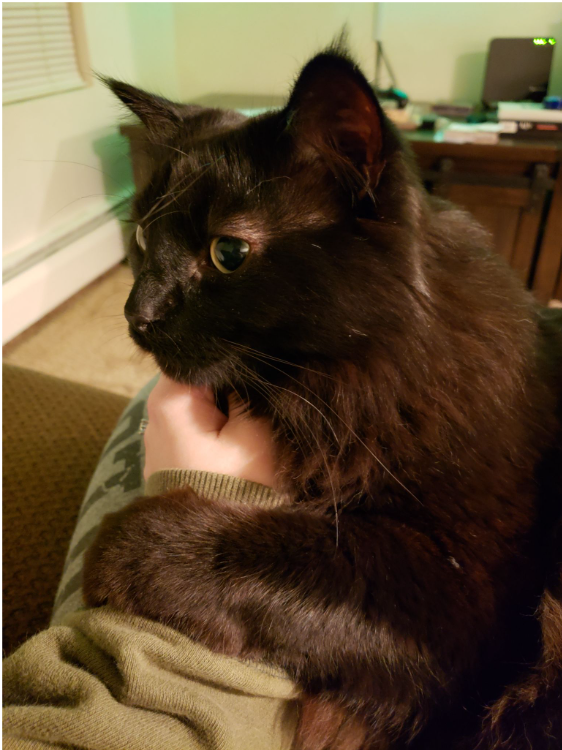
Binx was affectionate and endlessly curious. She had a habit of “stealing our hands” while cuddling…wrapping her paws around a hand, tugging it close, and falling asleep there. If you tried to pull away, she’d tighten her grip just enough to pull you back. She talked back in full conversations, purred constantly, and loved to be near us, following us from room to room. Meal times, medication schedules, and even trips out of town revolved around her needs (and she made sure to let us know when we were slacking).
Her presence was stitched into the rhythm of our home. She was woven into every part of our day. Losing her felt like losing a part of our daily structure, and the house felt emptier and quieter without her. Figuring out how to go through the day without her felt impossible.
Why Pet Loss is Minimized (and Why It Shouldn’t Be)
Losing a pet is difficult. Almost anyone who has a pet will tell you that they are not just an animal that lives in the house. They are a part of the family. Yet we don’t talk about pet grief the way we talk about the grief of losing another person. If anything, that grief is often minimized or looked down upon.
This is called disenfranchised grief: grief that isn’t socially recognized or validated. We see this in many types of loss. For example, when someone loses a human loved one, workplaces often allow only 3–5 days of bereavement leave, and society expects you to return to “normal” as if nothing happened. You may hear comments like, “Why are you so upset? You didn’t even know them that well!” or “It’s been a year, it’s time to move on.” These messages subtly communicate that grief is only acceptable under certain circumstances.
Disenfranchised grief absolutely shows up with our furry companions. You may hear comments such as, “It’s just a dog, you can always get another one,” or “At least it wasn’t your parent/child/spouse.” And whatever your employer’s bereavement policy is, it almost certainly doesn’t extend to your fur baby.
Because pets aren’t legally recognized as family members (you can’t claim them as dependents, put them on your health insurance, or leave them an inheritance) people often feel the need to “move on” quickly. Many experience guilt, shame, or embarrassment about how deeply their loss hurts.
The first week without Binx, I wanted to call in to work and reschedule appointments every day. I felt silly even thinking about it. What would my coworkers think if I called in for a pet? What would clients think if I canceled because I was grieving? Would they think I was weak, not a good therapist, or that my pet mattered more than their very real, very valid struggles? These thoughts are common, and they highlight why pet grief often goes unspoken.
The Unique Bond Between Humans and Pets
Humans and their pets share a unique, deeply emotional bond. Our pets offer unconditional love. They don’t criticize, lecture, or judge. They greet us joyfully after a long day, comfort us when we’re stressed, and accompany us through life’s ups and downs.
Pets are also constant anchors in our routines. Feeding, walking, cuddling, and playing…all these small tasks structure our days. Their absence is a constant reminder of the loss we are processing.
For different generations, pets fulfill different roles. For older adults, they may be social companions during a time when friends or family are less available. For younger adults, pets may be substitutes for children or partners, offering affection and connection. For children, they may feel like their first best friend.
Even weeks after Binx’s passing, I found myself glancing at her usual spots…her kitty condo, the sunbeam on the den floor, the couch. I half-expected her to be there, and the emptiness hit me in little waves throughout the day. Our house felt quiet without her ambient purring and the tiny rhythms that had become invisible but essential.
How Grief Shows Up in Pet Loss
Pet grief can look a lot like human grief. You may experience:
Anger: at the vet, at yourself, at your partner, at your pet
Guilt: wishing you had done more or thinking you didn’t do enough
Numbness: a disconnect from yourself, others, or the world
Lack of motivation: not wanting or having the energy to engage in daily routines or obligations
Depression: a deep and all consuming sadness that makes even small tasks feel heavy
Anxiety: constant worry, questioning your choices, or feeling unsettled
Hypervigilance: restlessness or the need to stay busy to avoid thinking about the loss
Relief: peace that your pet no longer suffers or that you no longer have to extend your emotional energy into their end of life care
Grief often comes in waves. There may be moments when you feel okay, followed by intense sadness triggered by a memory, an object, or a daily routine.
After Binx passed, I had days of almost normalcy, followed by moments of complete disorientation. I’d pick up a book only to set it down after a paragraph, forget where I parked at Costco, or find myself driving back to Starbucks because I forgot my order. Filling two food dishes instead of three, seeing movement out of the corner of my eye, or hearing a small noise that reminded me of her…each moment reminded me of her absence. Over time, the intensity eased, but those first weeks were disorienting.
Supporting Ourselves and Others Through Pet Grief
Grief is unique to each person. Just because your grief looks different from someone else’s doesn’t mean it’s wrong or that you loved your pet any less.
Some ways to cope and honor your pet:
Create a pet memorial: Personalized stones, shadow boxes, or photo albums can preserve memories, whether it is something professionally made or something made by your own two hands.
Have a funeral: Even without remains, a small ceremony at home or a favorite spot can provide closure.
Write a letter: Hear me out because obviously pets can’t read. But a letter can help express your feelings, favorite memories, or what you miss…it’s for you, not your pet.
Journal: Writing in a journal or notebook might be a good way to work through your experiences. There are grief workbooks available online and in bookstores (some are pet specific!) that can help guide you through your grief and loss.
Talk to someone: Friends, family, or support groups who understand your bond can validate and comfort you.
Join online communities: Pet-loss forums, social media groups, or grief-specific organizations connect you with others who understand.
When Binx passed, my coping evolved depending on where I was at in my grief. Initially, I just wanted to talk about her constantly. Thankfully, I had fantastic friends that allowed me space to do that. Later, creating a Shutterfly photo book of our 10 years together became a way to honor our memories of her. Maybe some day I will get her paw print tattooed.
Helping Children Cope
For children, the loss of a family pet may be their first encounter with death, and adults often worry that kids won’t understand or that the topic is too heavy. Avoiding the conversation, however, can leave children confused, anxious, or with inaccurate ideas about what happened. Children are often more resilient and perceptive than they are given credit for.
Here are some ways to support children through pet loss:
Use clear, concrete language: Avoid euphemisms like “put down,” “lost,” or “at rest.” Stating that a pet has died is often best to help a child avoid confusion and understand the permanency of the loss. Idioms like “we lost Fido” might lead a child to believe that Fido can be found, or “Snickers is at rest” might lead a child to believe that their pet is simply taking a nap and will wake up soon.
Encourage questions: Invite children to ask anything they want about the pet or the experience. Answer honestly and calmly, and validate their feelings. Children may worry that they caused the death or that they won’t see their pet again. Address these fears gently.
Share your own grief appropriately: Children learn from adult modeling. Showing that sadness, reminiscing, or talking about your feelings is okay can normalize their own emotions.
Storytelling and creative expression: Encourage children to write stories, draw pictures, or create memory books about their pet. This allows them to express emotions, celebrate the pet’s life, and process the loss in a tangible way.
Read books about pet loss: Age-appropriate stories can open dialogue and give children language to express themselves. There are many out there, but some helpful titles include:
The Invisible Leash by Patrice Karst
My Forever Friend by Sophie Willow
The Rainbow Bridge by Adrian Raeside
I’ll Always Love You by Hans Wilhem
Anjo in the Sky by Harris Sherman
The Heaven of Animals by Nancy Tillman
Reading these together can create space for discussion and reflection.
Imaginative play: Allow children to act out experiences related to their pet such as playing veterinarian, being the pet, or role-playing favorite moments. This type of reenactment helps them process feelings of loss and regain a sense of control.
Include children in rituals and memorials: Funerals, planting a tree, creating a memorial stone, or lighting a candle in honor of the pet provides structure and an opportunity to say goodbye. Rituals validate grief and give children a sense of participation and closure.
Maintain routines: Pets are often woven into daily schedules. Keeping consistent meal times, school routines, and playtimes can provide stability while children process their grief.
Children may express grief differently than adults, such as through play, anger, withdrawal, or even laughter at unexpected moments. All reactions are normal. Creating a safe, supportive environment where they can share memories, ask questions, and participate in remembrance helps them develop healthy coping strategies that can last a lifetime.
When Grief Doesn’t Ease
There’s a beautiful image of grief being a ball inside a jar. We often think grief gets smaller over time. But the truth is, the ball stays the same, we just grow around it. It takes up less space, but it’s still there.
But sometimes, that growth is hard. Sometimes we stay stuck in the pain. And when that happens, it’s okay to seek professional support. Reaching out for help doesn’t mean something’s wrong with you. It means your pet mattered deeply. And the loss deserves space and care.
Losing a pet is real, painful, and valid. Grief may ebb and flow, sometimes overwhelming, sometimes subtle. Pets teach us about love, resilience, and presence; their loss can shake the very rhythms of our daily lives.
Your grief is legitimate. Your memories are meaningful. And your healing is possible. Honoring your pet through rituals, reflection, and support ensures that their legacy continues to bring comfort, even as you move forward.
Photo of Binx: