High Achievers in Transition: Navigating College and Connection in a Social MediaWorld
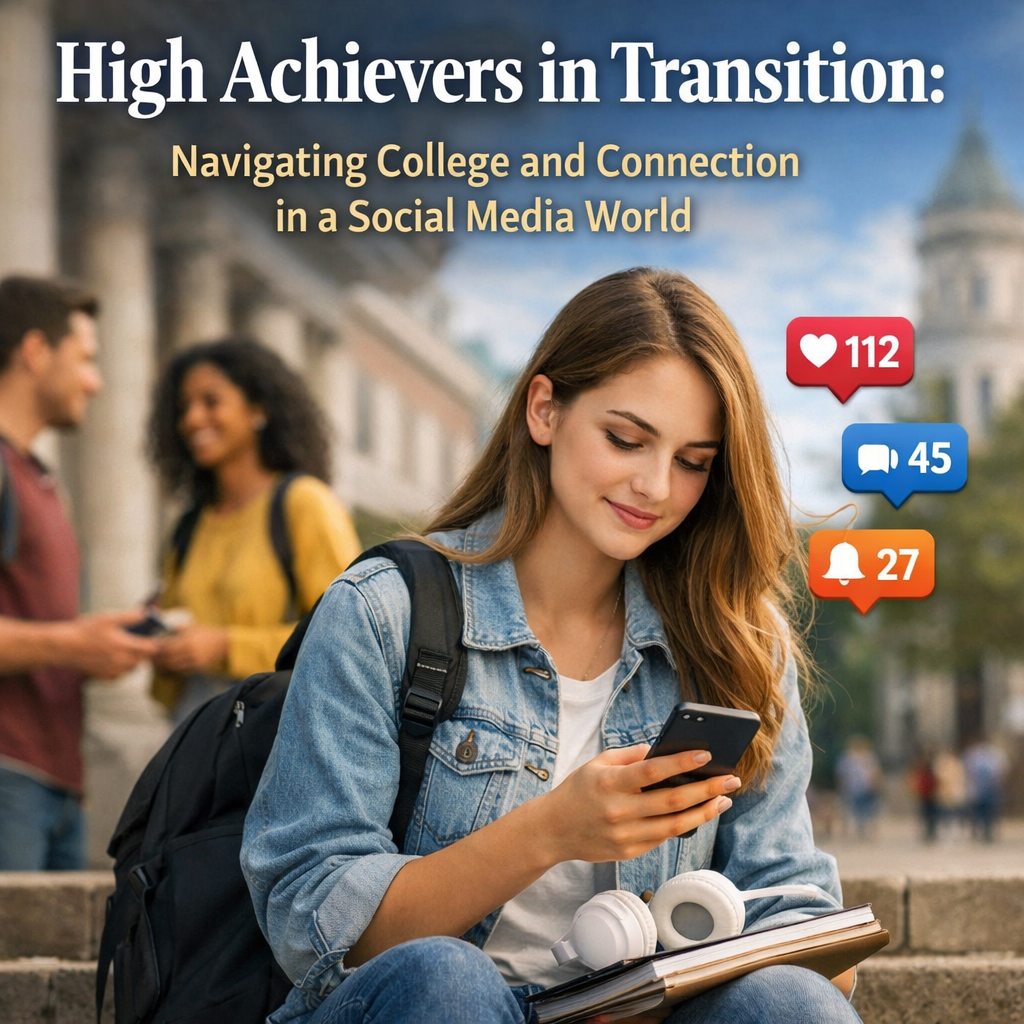
Written By: Piper Linssen, Clinical Intern Therapist
The straight-A student who never forgot homework suddenly forgets to do laundry for the third
time this month, leaving them with no clean clothes in sight. The star athlete who never missed
practice or a workout struggles to find a routine, make it to class, or even get out of bed some
mornings. For high-achieving teens, the transition to college can be unexpectedly rocky.
Think about it: throughout childhood and adolescence, these students get good grades, perform
well in sports, and have a solid group of friends. Over time, everyone around them, including
friends, teachers, and parents, starts to expect their success. Then suddenly, they are faced with
a level of independence they have never experienced, expectations that are not always clearly
defined, and a world where no one is keeping score. Not to say they have never faced hardship
before, but this is a type of challenge that feels unfamiliar and overwhelming. It is a kind of
culture shock, and even the most capable, motivated students can feel completely thrown off
balance.
Society’s Assumption: "But they have social media, FaceTime, and texting. College
students are more connected than they ever were! If college students are
struggling, they should just talk to their friends and family for support."
Yes, college students have access to all of this, but that doesn’t necessarily make it easier to truly
connect. How easy is it to reply “I’m fine” to a text when you are crying in your car? How often
do you edit your photos for social media to hide a pimple or make yourself look slimmer? Or
maybe you’ve posted a family photo that looks perfect and happy, even though behind the
scenes, there was total chaos. Phones allow connection, but much of that connection is curated
and controlled by the user, showing the version of ourselves we want others to see rather than
who we truly are. This makes forming real, meaningful relationships in person feel daunting and
unfamiliar. Many college students struggle to make decisions and exercise their own judgment
because they have grown up unknowingly seeking validation from others day in and day out.
College brings enormous pressure to make friends, connect with classmates, and engage with
professors. Just having a phone does not mean a teen feels truly supported, seen, or heard.
Constant notifications, online comparisons, and the pressure to maintain an image can make
this transition feel even more isolating than it was for previous generations.
So, now what? First, just being aware of these challenges is a big step because you can start
preparing and coping ahead of time. High-achieving students often feel like they have to be
perfect at everything, but here’s the thing: mistakes happen, you aren’t going to get it right on
the first try, and that’s okay. Students and parents alike should try to reframe mistakes as
chances to grow rather than proof of failure.
Next, understand that building real connections takes time. Just because your old classmates
from high school are posting pictures online with their massive friend groups captioned “besties
forever,” doesn’t mean that’s the full story. Start small. Join a club that genuinely interests you,
ask a classmate to grab coffee after class, or just make it a goal to say hi to one person on your
walk to class. Small, intentional steps matter.
Another big piece is reflecting on your own need for constant validation from your phone or
social media. How often do you check your phone for reassurance instead of checking in with
yourself? Journaling, going for a walk with no music to just think, or talking with a counselor
can help you process your feelings without relying on likes or comments. Doing this early can be
a game-changer, considering the long wait times for mental health support on college campuses.
Over time, these intentional practices help students gain confidence, make well-informed
decisions independently, and build real relationships that go far beyond what you see on a
screen.
At the end of the day, transitioning to college is a big shift for any student, even the high
achievers. It’s normal to feel unsure and overwhelmingly lonely at first. Awareness, effort, and
patience go a long way. By giving yourself permission to have awkward conversations and make
mistakes, you are taking steps toward building real connections that will help you thrive. College
is a time to explore and grow, not to be perfect. Remember, the self-confidence, trust,
relationships, and lessons you gain now will last far longer than any social media post, grade, or
first-place medal ever could.
