Can I Call a Therapist for Someone Else? Understanding Consent and Legal Limits in Therapy
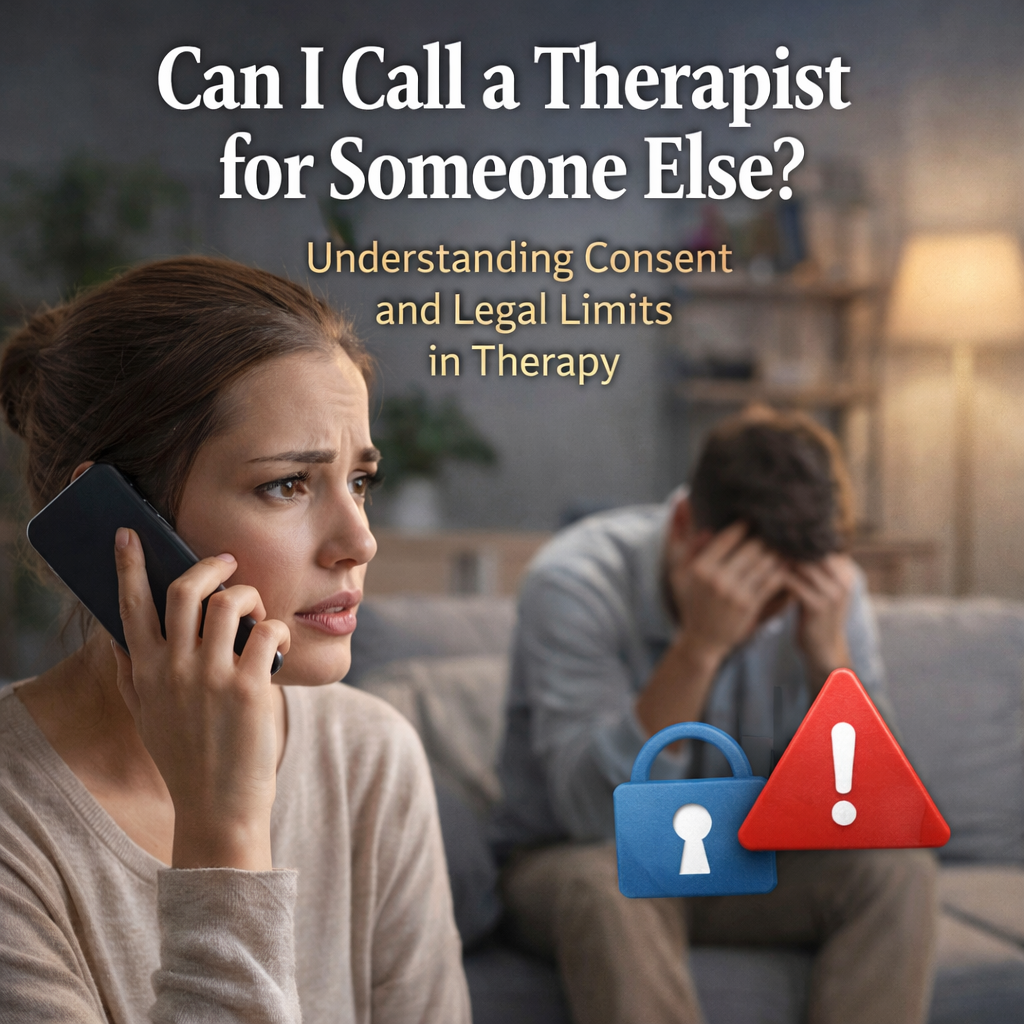
Written By: Cassy Schraft, MSEd, LPC, EMDR
It’s a situation many people find themselves in: you're deeply concerned about a friend, family member, or child in your life. You want to help. So you call a therapist's office on their behalf only to be told that nothing can be done unless the individual contacts the clinic directly, or you are their legal guardian.
It can feel frustrating and heartbreaking, even punitive. Why are there so many limitations when you’re just trying to get someone the help they need?
The answer lies in the ethical and legal responsibilities therapists have around consent, confidentiality, and autonomy. In this post, we’ll break down why these rules exist, what they mean, and how you can help if you’re worried about someone.
Why Consent Matters In Therapy
Therapy is built on trust, safety, and personal choice. For therapy to be effective, the person participating needs to understand what it involves and voluntarily agree to take part. This is what’s known as informed consent.
Just showing up to a therapy session isn’t what makes therapy effective. As any therapist will tell you, there’s nothing magical about the four walls we work in. What is magical is the collaborative work the therapist and client do together. And if the client is not invested in participating and doing the hard work, therapy won’t be effective.
In fact, when therapy is entered into unwillingly (or under pressure) it can damage trust, reinforce resistance, or leave the client feeling disempowered. That experience can reinforce the belief that therapy “doesn’t work,” and may actually make them less likely to seek help in the future.
That’s why we take consent so seriously. Therapists are legally and ethically required to obtain a client’s consent before beginning treatment, protect the client’s privacy under laws like HIPAA, and avoid treating anyone who hasn’t actively agreed to be in therapy. Without consent, a therapist cannot start services…even if the person in question is clearly struggling.
Why You Can’t Make the Call for an Adult Friend or Family Member
If your adult friend, partner, sibling, or coworker is going through a mental health struggle, it’s completely natural to want to step in. But unless they are in immediate danger of harming themselves or others…and meet the legal criteria for emergency intervention…they must choose therapy for themselves.
Adults have the legal right to make decisions about their own healthcare. Calling on their behalf could breach their privacy or autonomy. And even if you’re offering to pay for therapy or provide transportation, a therapist cannot ethically provide care without the adult’s direct involvement and consent.
This also applies to young adults who are still living at home or financially dependent on their parents. Once someone turns 18, they are legally considered an adult. This means parents or caregivers no longer have automatic rights to make healthcare or mental health decisions on their behalf, even if they still rely on you for rides, insurance, or managing appointments.
This transition can be confusing, especially for families with high school seniors or college students who are still “launching.” But from a legal and ethical standpoint, therapists must treat 18-year-olds as independent clients, and services can’t be initiated or discussed without their explicit consent.
There are exceptions for individuals who have a legal guardian or a power of attorney (POA)—someone who has the documented legal authority to make medical decisions on their behalf. In such cases, legal documentation will typically be required before services can begin.
What About Kids? Can I Call for a Child I’m Worried About?
This is another area where people often feel stuck. Maybe you’re a teacher, an aunt or uncle, a coach, a grandparent, a close family friend, or the child’s parent’s long-term partner. You see a child struggling and want to get them help.
But unless you are the child's legal guardian, you likely can't authorize therapy for them. Only legal guardians have the authority to consent to medical and mental health treatment for minors. Therapists are required to verify that they have proper legal permission before starting services with a child.
This can be especially tricky when someone plays a significant caregiving role, such as a grandparent who provides daily care or a long-term partner of the child’s parent who has raised the child for years, particularly when there’s an informal agreement or collaboration with the parent but no court-ordered documents. But unless there is legal documentation in place (such as guardianship papers, a custody order, or POA) you are not legally authorized to consent to therapy on the child’s behalf.
It’s not uncommon for therapy clinics to request legal paperwork when the caregiver is not a biological parent. This isn’t about being rigid or unsympathetic. It’s about ensuring that therapists are acting within the law and protecting everyone involved, including both the child and the parents who retain legal rights. Even a signed note or verbal agreement from a parent giving permission for another adult to consent to services may not be sufficient without court-recognized documentation.
It’s also important to understand that a signed Release of Information (ROI) allowing communication with another adult in a child’s life is not the same as legal authorization to consent to treatment. An ROI permits the therapist to share information with that person, which can be helpful when other adults are involved in the child’s care. However, it does not grant that person the authority to make treatment decisions or provide consent for therapy.
That said, mandated reporters, including teachers, school counselors, or healthcare providers, do have a legal obligation to report safety concerns to child protection services.
What Happens If You Do Call on Someone Else’s Behalf?
If you contact a therapy clinic about someone else, it’s completely understandable. And it’s something clinics encounter often. Whether it’s a worried grandparent, a concerned partner, or a close friend, people reach out because they care and want to help. And while therapists truly appreciate that intention, their ability to act is limited without the individual’s direct consent.
Clinic staff may be able to share general information such as how the intake process works, what types of services are offered, and how someone can get started. They can often explain the next steps a person would take to initiate therapy or connect you with crisis resources if there’s an immediate concern for safety.
What they can’t do is receive personal or identifying information about the individual you’re calling about. They also can’t reach out to that person to invite them into therapy, follow up to “check on them,” or begin any kind of clinical services without proper consent or legal authority.
This can be frustrating to hear, especially when someone is clearly struggling and not reaching out on their own. But these boundaries are in place to protect the privacy, autonomy, and dignity of the person in question. Even well-meaning attempts to involve someone in therapy must respect their legal rights. Otherwise, the therapeutic relationship could be compromised before it even begins.
That said, don’t hesitate to call and ask questions. While the clinic can’t take action without consent, they can guide you in understanding your options, talk through your concerns in a general way, and help you find language to support the person you're worried about. Sometimes, knowing what to say and how to encourage someone to reach out is just as valuable.
What You Can Do If You're Concerned
Even if you can’t initiate therapy for someone else, there are still meaningful ways to offer support:
For Adults
Talk openly. Let them know you’re concerned and encourage them to seek support. Avoid ultimatums or pressure. Therapy is an incredibly vulnerable process, and people need space to come to it on their own terms.
Offer help with logistics. Share phone numbers, website links, or offer to sit with them while they make the call. Drive them to appointments if they're open to it. Helping reduce barriers is a kind and appropriate way to show support.
Reach out in emergencies. If someone is at risk of hurting themselves or others, call your local crisis team or 911. You can also contact the 988 Suicide & Crisis Lifeline in the U.S.
For Children
Speak to their parent or guardian. Many caregivers may not realize what’s going on or may not know how to seek help. Approaching them with concern and compassion rather than blame can make a big difference.
Provide resources. Sharing information on counseling clinics (especially those that offer services specifically for youth), helpful websites, and phone numbers can also support parents who may not know where to look for help.
Report concerns. If you believe the child is in danger, or you suspect abuse or neglect, file a report with child protection services or follow your mandated reporting protocol.
Why These Limits Exist — And Why They Matter
It’s easy to feel blocked by these systems, especially when you're acting from a place of care and good intentions. But these rules aren’t about red tape. They’re about protecting each person’s rights, privacy, and autonomy.
Therapists are deeply committed to helping people. But they are also bound by legal and ethical frameworks that ensure therapy remains a safe and respectful space. Ignoring those frameworks can result in legal consequences, a breakdown in trust, or even make therapy less effective.
Final Thoughts
If you've ever tried to help someone get into therapy and felt helpless, you're not alone. These situations are complex and emotional. But knowing what you can and can’t do empowers you to take action that’s ethical, legal, and effective.
And remember: even if you can’t make the call for someone, you can still be a steady support in their life. That support often matters more than you know.
If you’re ever unsure, don’t hesitate to call a clinic (like ours!) for general guidance. We may not be able to start services without consent, but we can help you understand your options and support you in supporting someone else.
Quick FAQ
Q: Can I refer my adult child to therapy if they won’t make the call themselves?
A: Not unless you have legal authority (like guardianship or POA). Adults 18+ must consent to their own care.
Q. What about if my adult child is still in high school or on my insurance plan? Can I schedule therapy for them?
A: Legally, 18-year-olds are considered adults. Even if they rely on you for daily support, they must initiate and consent to therapy themselves.
Q: I’m not the child’s parent, but I’m a full-time caregiver for them. Can I schedule therapy for them?
A: Only if you have legal documentation (such as guardianship or legal custody). A parent cannot verbally authorize another adult to consent to therapy in their place without a legal order.
Q: Why do you need guardianship or custody paperwork on file before starting therapy?
A: Therapists need this paperwork to confirm who has legal authority to consent and to have a clear record if questions about consent arise. Without it, providing services could violate privacy laws and ethical standards.
Q: Can a therapist call or check in on someone if I give them the person’s name and explain the situation?
A: No. Therapists are not allowed to initiate contact with someone who has not consented to services. Even if you provide details or express concern, the therapist cannot reach out to the individual directly without that person’s voluntary involvement.
Q: Can I attend therapy on someone else’s behalf to talk about what’s going on with them?
A: You can seek therapy for yourself to process your concerns about someone else. This can be a healthy way to learn supportive strategies, set boundaries, and manage the emotional toll of caregiving or concern. However, this does not replace therapy for the other person…and the therapist would not be treating or assessing them indirectly.
Q: What if the person says they want help but still won’t make the call?
A: It’s common for people to feel overwhelmed by the first step. You can offer to sit with them while they call, help them look up providers, or even role-play the conversation. Just be careful not to take over the process. Therapy is most effective when the person initiates it themselves.
Q: What if I think someone is in danger?
A: In emergencies, contact 911 or your local crisis services. In non-emergency situations, offer resources and encourage them to reach out.
