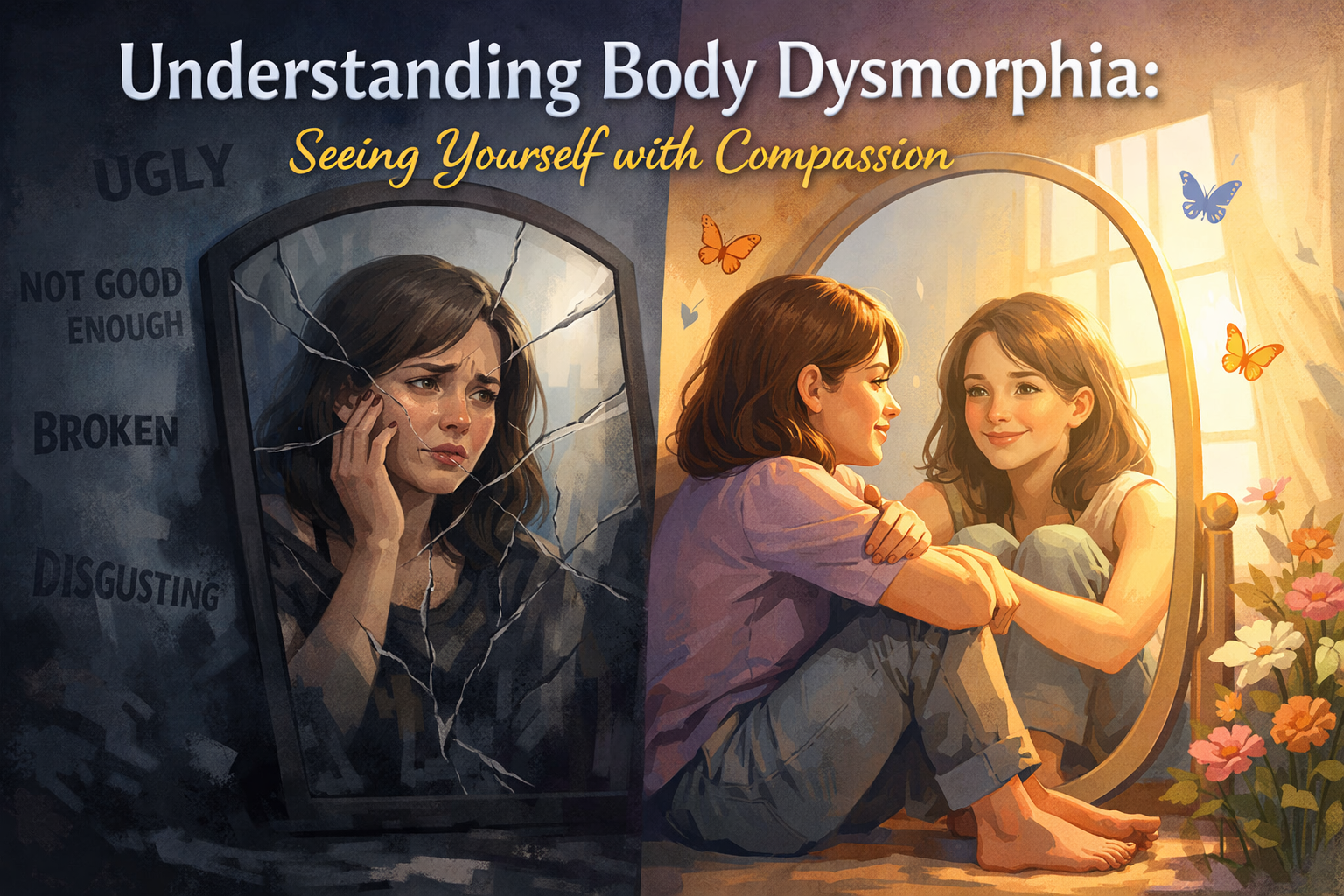
Understanding Body Dysmorphia: Seeing Yourself with Compassion
Written By: Tara Foytik, LMFT-IT
Many people struggle with how they see their bodies. For some, these concerns go beyond occasional insecurity and become persistent, distressing, and all‑consuming. This experience is often referred to as body dysmorphia, or body dysmorphic disorder (BDD).
At our clinic, we want clients and families to know that body dysmorphia is real, common, and treatable—and that no one has to navigate it alone.
What Is Body Dysmorphia?
Body dysmorphia involves an intense preoccupation with perceived flaws in one’s appearance. These “flaws” may be minor or not noticeable to others, but they feel very real and overwhelming to the person experiencing them.
People with body dysmorphia may:
Spend significant time thinking about their appearance
Frequently check mirrors or, conversely, avoid them altogether
Compare themselves to others constantly
Seek reassurance but feel little relief when they receive it
Avoid social situations, photos, or activities because of appearance concerns
These thoughts and behaviors can interfere with daily functioning, relationships, and overall well‑being.
How Body Dysmorphia Affects Emotional Health
Living with body dysmorphia can be exhausting. It often brings feelings of shame, anxiety, frustration, or sadness. Many people describe feeling trapped in a cycle of negative thoughts about their body that are difficult to quiet.
Social media, cultural beauty standards, and constant comparison can intensify these struggles, making it even harder to develop a balanced and compassionate view of oneself.
It is important to understand that body dysmorphia is not about vanity—it is about distress and the way the brain processes self‑image.
You Are Not Alone
Body dysmorphia affects people of all ages, genders, and backgrounds. Many individuals suffer silently, believing they should “just feel more confident” or that their concerns are not valid. In reality, these experiences are more common than most people realize.
Acknowledging the struggle is a powerful first step. Seeking support is not a sign of weakness—it is a sign of self‑awareness and strength.
How Support Can Help
With the right support, people can learn to challenge unhelpful thought patterns, reduce compulsive behaviors, and build a healthier relationship with their body. Treatment often focuses on:
Increasing awareness of thought patterns related to appearance
Developing coping strategies to manage distress
Reducing behaviors that reinforce negative self‑image
Building self‑compassion and body neutrality
Progress may be gradual, but meaningful change is possible.
Moving Toward Healing
Healing from body dysmorphia is not about achieving a certain look—it is about reclaiming time, energy, and peace of mind. It is about learning to live more fully, with less control from appearance‑based thoughts.
If you or someone you care about is struggling with body image concerns that feel overwhelming, support is available. Change takes time, but with guidance and understanding, it is possible to see yourself—and your life—through a gentler lens.
